SRB’s Machine Politics Helped Hogan to Victory

Ed. note: Today’s post is a guest submission by friend of the blog and local political observer Paul M. Gardner.

Almost a year before June’s Democratic primary Mayor Stephanie Rawlings-Blake endorsed Anthony Brown for governor. Before the race had a chance to begin, before the first debate, before a single policy announcement, and even before the field of candidates was finalized the mayor tried to extinguish every bit of outsider momentum she could before it had a chance to form. Most importantly, she did this before even knowing for sure which candidate would best serve Baltimore and what specific steps they would take to improve our city. She could have leveraged her influential position as Mayor of Baltimore to gain concessions from a candidate before deciding to give Brown her endorsement a year and a half before the general election, but she chose not to.

Most of the City Council followed suit, notably Council President Jack Young, as well as several of Baltimore’s representatives in the House of Delegates. Their early endorsements had the hoped-for effect; Baltimore City was never in play in the primary. Not even for a moment. What should have been an exciting, energized race was anything but. While Heather Mizeur and Doug Gansler scrambled to secure at least a respectable amount of voters in the city, Lt Governor Brown never had to.

The issues that affect Baltimore City, the issues that should have rightfully been the most prominent in this democratic primary, never had an impact in the campaign in a meaningful way. Instead of talking about crime and schools and how to improve these problems, the candidates argued over whether to change the name of the DC football team, about who fucked up the healthcare exchange, and which liberal Democrat would cut taxes the most. Anthony Brown’s confidence even went so far that when it came time to attend a campaign debate in Baltimore and discuss our issues, he skipped it in favor of a fundraiser. It was a stunning display of arrogance, and it was only possible because the voters who put our mayor and city council in office trusted the recommendations of their elected officials. Brown/Ulman won Baltimore City by 24 points.

Then they lost by 9 to a Republican in a state that isn’t.

Perhaps predictably, Baltimore’s already historically low voter turnout fell by a third in the general election. City voters never really had the chance to get to know Anthony Brown or what he was about the way you can during a competitive primary. He thought he didn’t need us and that was clear from the day the mayor endorsed him. His issues were never ours but were those of a state that has proven itself to be completely unconcerned with the city except for that small part of it that exists between our stadiums and the nearest parking garage.

Even though Baltimore City couldn’t have changed the election night results on our own, a competitive primary would have made an enormous difference in the way it all ended, because competitive primaries make candidates stronger for the general. In competitive primaries a candidate’s flaws and their responses to their own shortcomings are revealed sooner. Their messages become more refined, and most importantly coverage from the media becomes exponentially greater during a close race and voters pay more attention.

Perhaps the additional 30,000 voters who came out in 2010 would have become more invested in a close primary and not stayed home like they did this year. Maybe you can even flip a few of those 29,000 Baltimore City Larry Hogan voters if they see something, anything, from the candidate during the primary that earns their respect. When the benefits of a close race and a battle-hardened Brown campaign extend statewide a better candidate isn’t prone to mistakes like this:


Turnout may fluctuate from one cycle to the next, but voters in Maryland are a known quantity. Politicians who want to win races will always have to work hard to increase turnout and earn our vote. When they don’t think they need to, when well-connected insiders do their best to make the path to victory as effortless and automatic as possible candidates become complacent, voters apathetic, and their support soft and unreliable on Election Day.

The mayor has since assured us in her weekly press conference that City voters aren’t responsible for the convincing victory of a Republican governor who will ignore our needs, nor for the humiliating loss of a Democrat who proved that given the opportunity, he’d do the same.

On this, the mayor and I agree completely, because she’s far more responsible for Hogan’s victory than we are.

Paul Gardner lives in Mount Vernon with 2 cats, graduated from the University of Baltimore, drinks whiskey, and eats tacos. Follow him on twitter at @paulmgardner.
The Text and Subtext of Urban Signage, Part V

Today is the final installment in our series on the signs one sees on city streets. Earlier this week we looked at the various signs found in good neighborhoods, bad neighborhoods, and marginal neighborhoods, and did a little exploration of how they contrast with each other. (Read the introduction to the series here.)

As we surveyed a large part of the city with an eye toward signs, we noticed a few interesting signs that didn’t necessarily have much to say about their location, but which were noteworthy nonetheless and we felt were worth posting. So today we present Part V: the leftover and vintage signs.

030 (2)

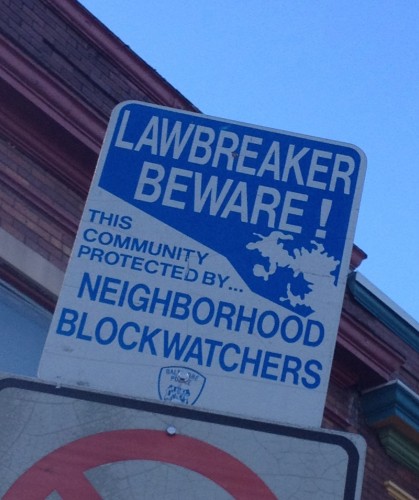
Unlike some other neighborhood watch type signs, this example is in virtually every neighborhood citywide and might even be present in the closer county suburbs. These signs have been a fixture at least since the Chop was a kid in the early 80’s and as far as we can tell they have no actual meaning whatsoever.

007

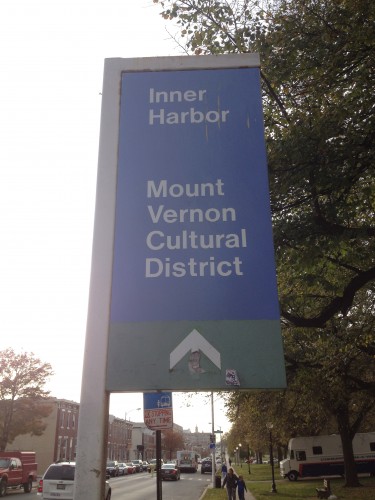
The green and blue signs that point to attractions are another sign that we can well remember seeing around when we were a kid. We believe that these date somewhere from the 1970’s and the period when the city was enthralled by Brutalism. They are starting to show their age in many places and we don’t think that the city is actively maintaining or replacing them with similar signs. Newer signs that point the way to attractions tend to look more like this.

The newer signs have retained the color scheme but look a bit more modern and are considerably smaller and thinner. Perhaps most worthy of note is that while the new sign points the way to transit, many of the older versions use the green area to indicate the proper lane to motorists.
The older version of these signs spread all over the city and highlight every attraction from Pimlico Race Track down to Fort McHenry. As a kid we always loved these signs because seeing them meant we were going deeper into the city to do something fun like go to the zoo or Memorial Stadium or the attractions at the Inner Harbor. If we ever get the disposable income together, we might decide to commission someone to paint us one of these on canvas.

040

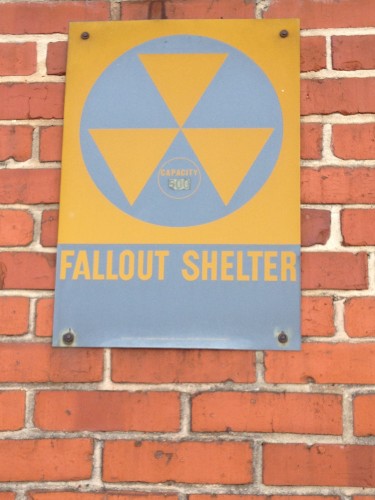
Here’s another sign we can recall seeing with some regularity as a kid. Our school had a few of them hanging around but they were already more or less obsolete by the time we had even the faintest notion of what nuclear war meant. After the Berlin Wall fell in 1989 (the Chop was 9 years old then) the Cold War was really over and these signs did become historic relics.

Originally these signs indicated where the public could shelter in the event of a nuclear attack by the Soviet Union. Now they indicate that a property hasn’t changed very much in the last 40-50 years. We found this one on a large building in a very industrial section of the city.

017

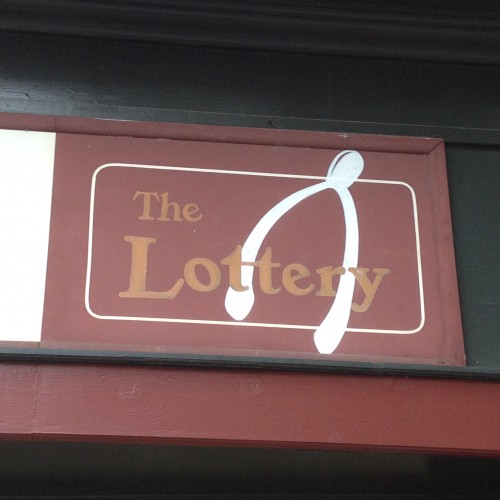
Here’s another sort of sign that indicates a neighborhood is changing by not changing at all. This one is from Ridgely’s Delight and we suspect they keep it around for old times’ sake, but there are plenty of examples of signs that say things like ‘lotto’ or ‘The Numbers Game’ or have dated Coke or Pepsi logos at the top that were once brand new and have just aged and aged and aged until they’re now vintage antiques in front of shops that are just barely hanging on.

055

017 (2)

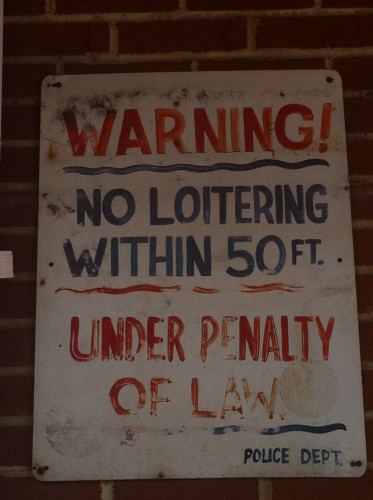
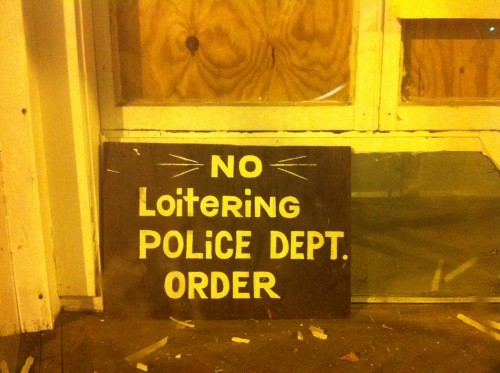
Here are a few vintage No Loitering signs. These both look to be hand-lettered. Top is from Dogwatch Tavern in Fell’s Point and the bottom is from Park Ave near Franklin Street.

006

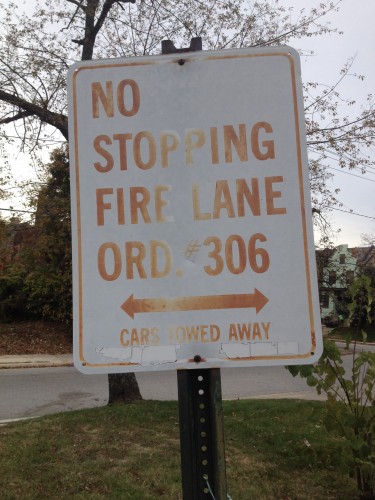
Here’s an old fashioned fire lane sign that was probably posted when the property was built and has likely just sat in the driveway ever since. Like many older signs it cites chapter and verse of the law it references, which seems kind of quaint by today’s standards.

056

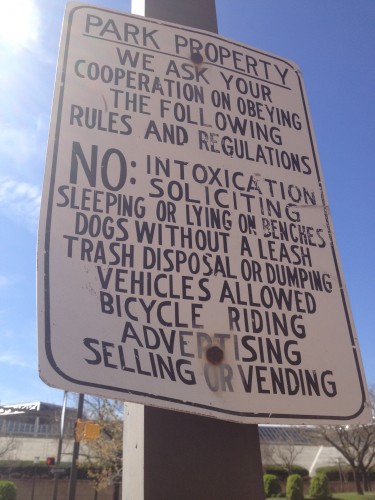
This sign hangs on Pratt Street in the plaza-sidewalk outside of the federal courthouse. It looks to predate almost everything around it; parking meters and benches and trash cans and the like. It’s an antique hanging among a city street that’s been entirely remade in the last generation. But they leave it up because all of the rules are still in force even though no one notices the sign. How do we know no one notices? Because people do all of these things every day in this park. Hell, we rode by on a bike when we snapped this photo.

002

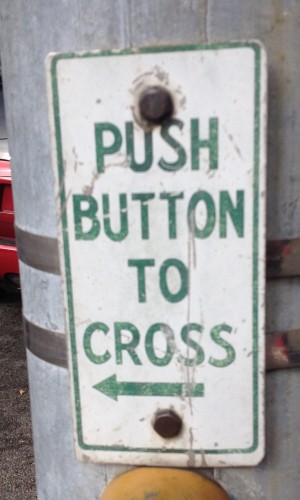
Obsolete signal technology, old sign. This little guy probably isn’t long for this world.

003

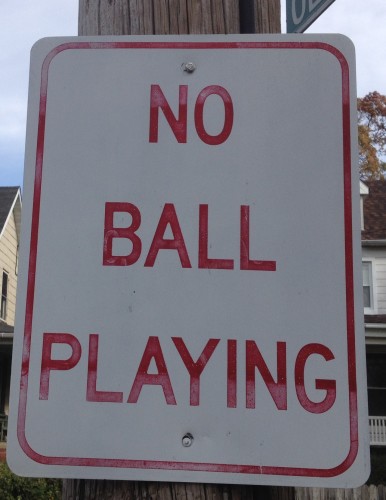
When it was installed this sign was probably a strong indicator of a healthy block with a lot of young families owning homes and kids playing outside. Since it’s on the Chop’s own block we can tell you that’s not so much the case right now. Similarly, something like handicap parking permit zones can indicate that the population of a neighborhood is aging as a whole.

008

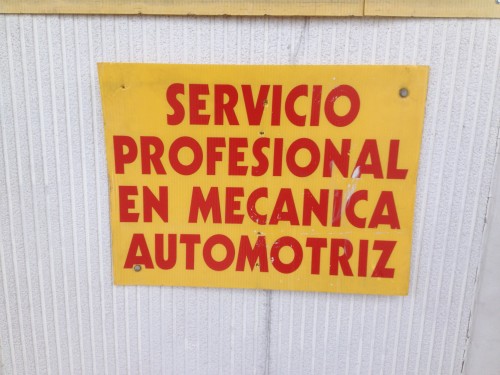
This sign in a Shell station isn’t interesting for what it says but because it’s in Spanish. It won’t tell you anything about the neighborhood you’re in unless you know much about the history of immigration and how racial succession works in urban neighborhoods. If you do it can suggest quite a lot about the surrounding area.

039

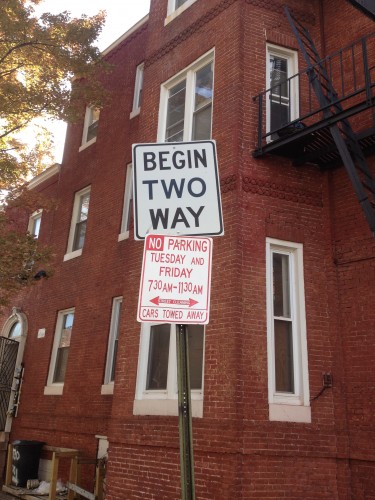
Finally we see what looks like a perfectly ordinary traffic sign from West Baltimore. Most people wouldn’t think twice about it but it struck us as being very oddly placed because this block sees very little traffic flow at all. It would seem that picking a block to split the street into one way traffic is over-engineering until one considers the exact location and historical context. Once that’s taken into account it’s pretty obvious that this is a relic of segregation, and was very likely placed to prevent black traffic from crossing into a white neighborhood. As this part of West Baltimore emptied out and turned to blight (this is very near the highway to nowhere) it was never necessary to reexamine the traffic pattern or adjust the signage, and it’s simply frozen in place.

The Text and Subtext of Urban Signage, Part IV

As we explained in the first post in this series, The urban landscape can be puzzling to the uninitiated. But if you were to take down all of the signs we’re featuring this week and pile them up in a warehouse somewhere we could tell you if they came from good neighborhoods, bad neighborhoods or somewhere in between just by what the signs are.

Today we’re going to take a look at signs found in good neighborhoods. There are a lot of factors that go into making a neighborhood good, but one can’t help but notice that making a ‘good’ neighborhood costs an awful lot of money. (Read part II here and part III here.)

044

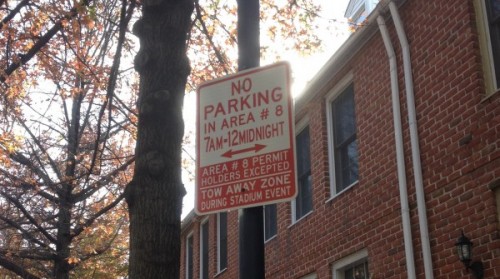
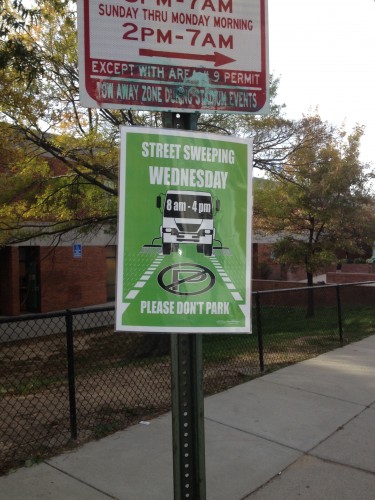
We want to start off with a parking sign because in a good neighborhood most of the signs one sees have something to do with parking. In bad or marginal neighborhoods there are very few signs governing parking but in good neighborhoods they are absolutely everywhere. There might be a dozen on every block. It’s also worth noting that the better (and richer) a neighborhood is the more restrictive parking laws are for outsiders. This sign from the very high income neighborhood of Otterbein is about as restrictive as it gets. For practical purposes no one can ever park here without a permit.

006

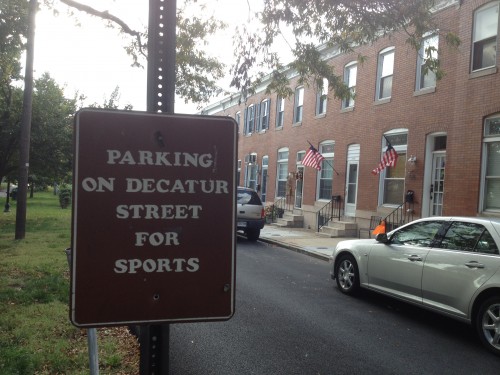
Here’s a parking sign of a different type from Locust Point. We can’t really tell if this is an official sign or not, but it hardly matters. The text is plain but the subtext says “We’re claiming entitlement to this public space [that we don’t own] and whether we’re right or not we’re going to piss and moan and bitch so loud and for so long that you’ll wish you’d never parked here anyway. We’re rich and used to getting what we want.” This is kind of like buying a house next to a school and whining when children walk by every day. We don’t even have a car to park but we’d like to extend a great big Eff You to the residents of Decatur Street.

055

Here’s yet another type of parking sign from south Baltimore. You’ve got to have a lot of extra money, and be pretty neurotic about the amount of trash in the street to commission a print run of signs like this. (There are many of these around Federal Hill.) Notice too the appearance of the word ‘Please.’ Take a look at the loitering sign we posted yesterday. Does it say ‘Please Don’t Loiter?’ No. It threatens arrest and jailtime. People in good neighborhoods go out of their way to be nice to each other (sometimes).

063

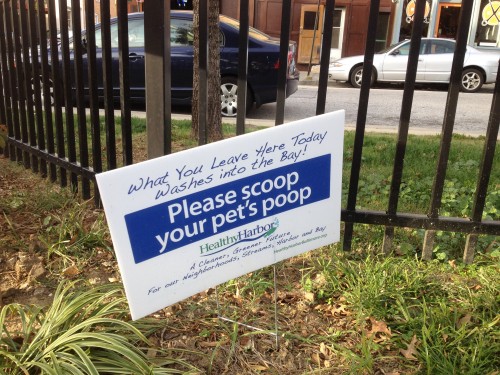
Here’s another example of good manners in signage. Compare this sign in very rich Canton Square with ones you’ve seen elsewhere that threaten fines and the spread of disease. This one is written like a children’s book. It rhymes for Chrissakes!

054

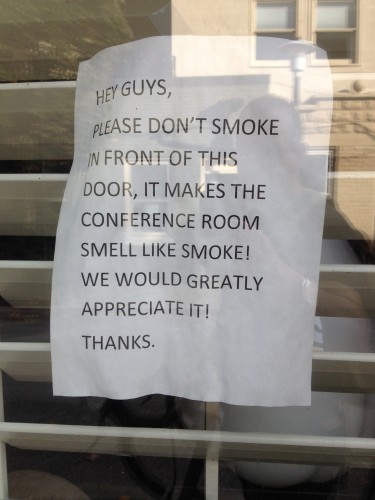
Here’s one that takes the niceness a little too far. It just oozes passive-aggressiveness. The writer of this sign would never break decorum or upset the harmony of the office by suggesting that his or her co-workers are lazy jerks with a filthy habit, but the message is very clear. Instead of citing a rule this sign plaintively asks for a favor, but the backwards use of exclamation points and periods betrays the impatience with the smoking problem. Even as we snapped this photo someone from this office came up to us and said “Hello” when it was clear what he was thinking was “Why is this asshole photographing our sign?”

065

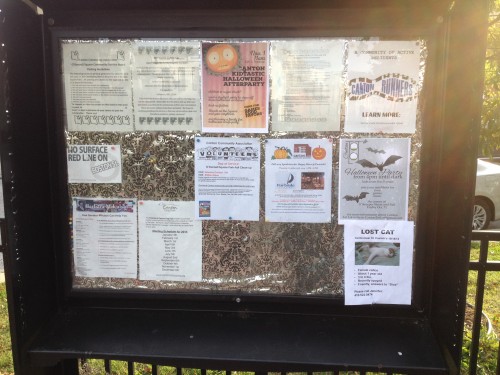
Here’s a community bulletin board in Canton. Compare it to this one in Station North, both for overall appearance and for what’s posted. Says a lot about both neighborhoods.

046

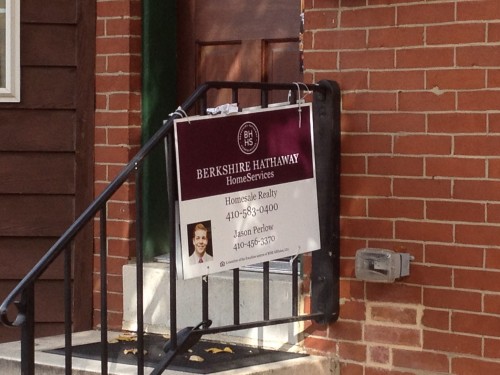
Here’s what a real estate sign looks like in a good neighborhood. A young and attractive real estate agent smiles out at you and is just waiting to show you your dream home. Compare this to the miserable signs in bad neighborhoods touting auctions and fast cash sales.

041

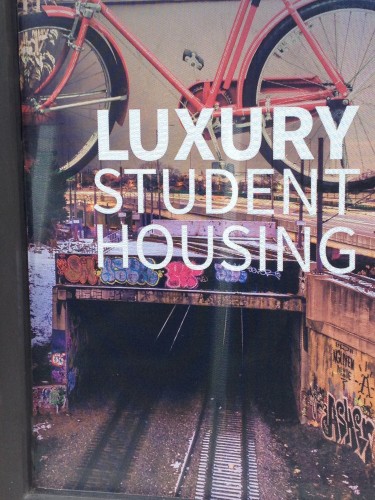
Here’s another real estate related sign, at UB this time. This sign is so ridiculous as to be absurd. Sings in good neighborhoods use words like Luxury. The absurdity is that luxury is something you earn as you move through life. the idea of a student living in luxury is ridiculous. Also, as someone who often rides a bicycle past train tracks and graffiti we can tell you it’s not very fucking luxurious. You’ve got to have more money than sense to fall for Luxury.

003

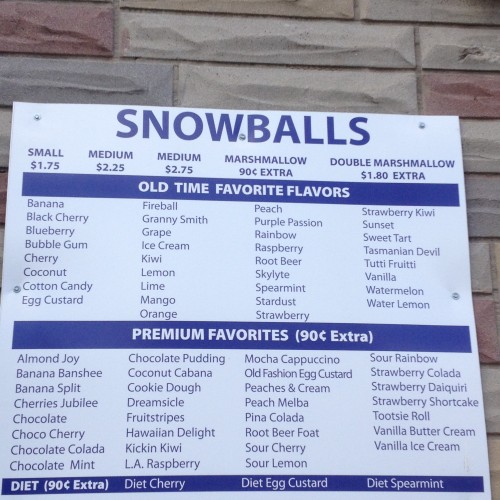
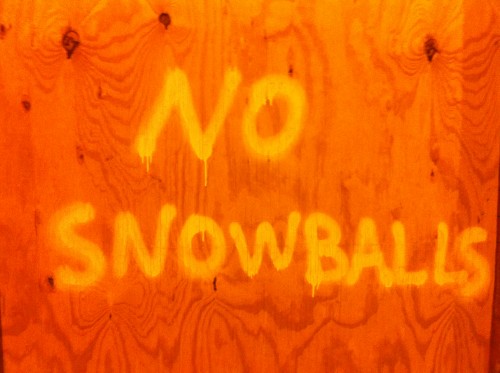
In a rich neighborhood even the snowball business is booming. A professionally made sign touts premium flavors. Compare that to this sad trombone.

016

017

025

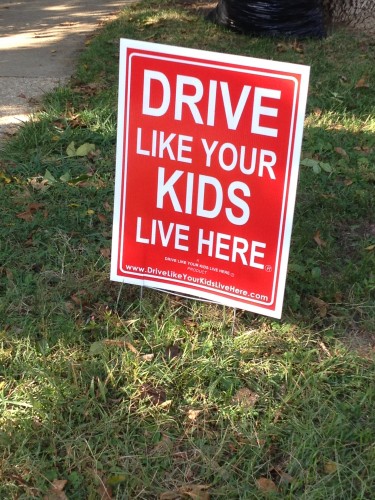
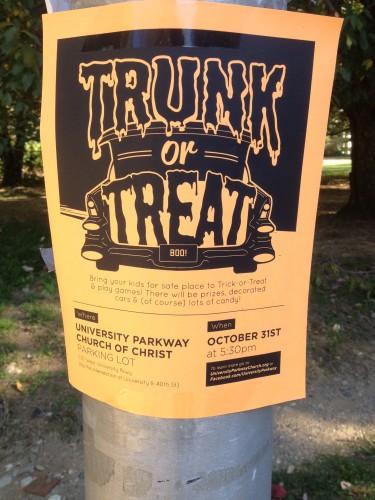
And we’re going to wrap up the signs of good neighborhoods with these two kid related signs. We’re going to venture to say that parents of all neighborhoods love their kids equally, but signs placed by overprotective helicopter parents only appear in pretty good neighborhoods.

The Text and Subtext of Urban Signage, Part III

As we explained in the first post in this series, The urban landscape can be puzzling to the uninitiated. But if you were to take down all of the signs we’re featuring this week and pile them up in a warehouse somewhere we could tell you if they came from good neighborhoods, bad neighborhoods or somewhere in between just by what the signs are.

Today we’re going to take a look at signs found in marginal neighborhoods. We’re not interested in specifically defining ‘marginal.’ You can plug in any mediocre adjective you like: blue collar, up and coming, working class, whatever. Wherever you see signs like these you’re not in the best neighborhoods, nor are you in the worst. (Read part II about signs in bad neighborhoods here.)
018

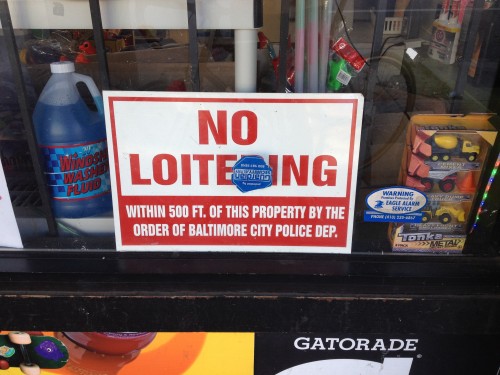
The various forms of No Loitering signs are most prevalent in neighborhoods with working class or lower middle class incomes. These are the kinds of places both here and nationwide where shops are open for business and streets and sidewalks are active with people, but where there are still enough knuckleheads with not-much to do hanging around during the day. You don’t see as many of them in nicer neighborhoods because they’re somewhat declassé and you don’t see them in really bad neighborhoods because people have largely given up on minor things like loitering.

026 (2)

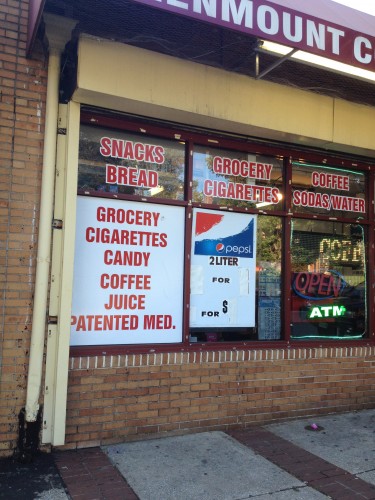
There are convenience stores in all sorts of neighborhoods but the signage in the window of this one is typical of marginal neighborhoods. It’s not as upscale as say, a legit 7-11 franchise, but it came from a signmaker and its meant to be welcoming and let you know that the store can meet your basic convenience needs. You won’t find really good coffee or current glossy magazines here, but neither will you be buying from behind bulletproof glass.

021

019

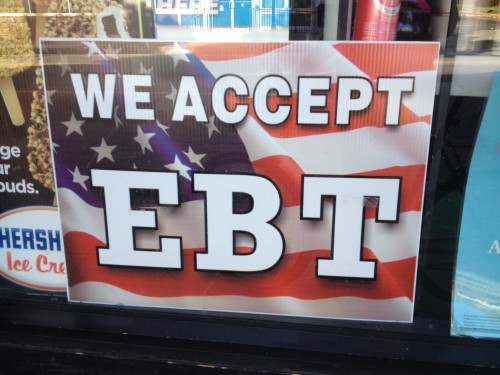
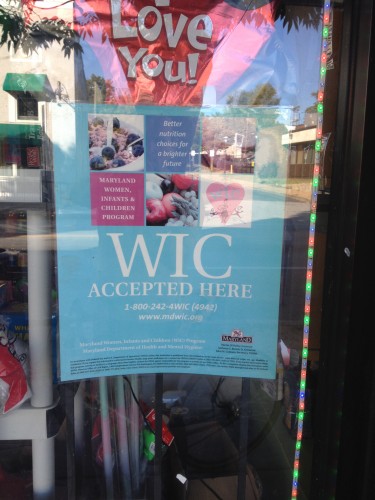
The surface message with these two signs is ‘we accept food stamps.’ Of course the subtext is ‘a whole lot of our business comes from food stamps and there are enough folks using them very close by that they’re our target customer.’ Cash customers are welcome too, of course, but you’re not going to see a lot of folks in here breaking out the platinum card or Apple Pay.

025 (2)

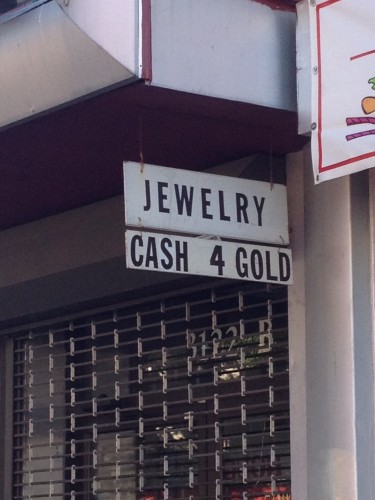
This sign’s sort of a double-edged sword. On the one hand people in the neighborhood have enough cash to support a jeweler. On the other hand they have so little money that they need to sell off their jewelry for cash now and again.
029

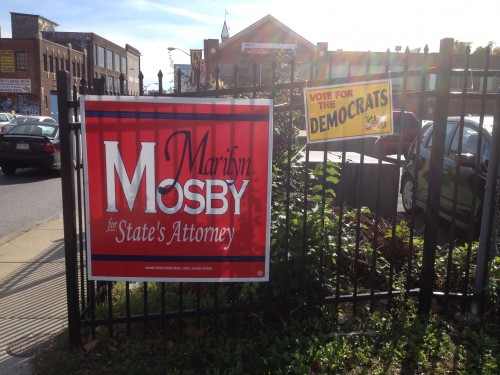
Here’s a peek at the good old Vote For the Democrats sign that’s becoming something of a tradition. These signs are pretty much litter and people in affluent neighborhoods with strong community associations and leaders wouldn’t tolerate their presence for even a day before some volunteer went to cut down most of them. But the people who campaigns pay to put them up don’t bother going into the worst neighborhoods, where concentrations of likely voters are sparse. So these pieces of trash end up in the middle ground of marginal neighborhoods where people care enough to probably vote, but not enough to study up on candidates or keep their streets clutter free.

038 (2)

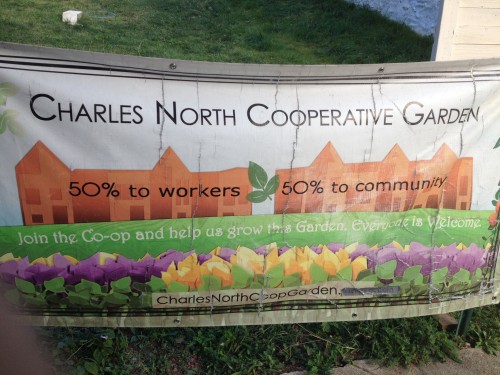
This sign is for a cooperative garden in Station North. It’s a double edged sword as well because what underlies it is that there are enough community minded activists around to change land from an empty lot to a productive garden, but also that the land isn’t worth enough for any development beyond a garden. Community agriculture is great, but it’s inconsistent with the planning principles of highest and best use.

040 (2)

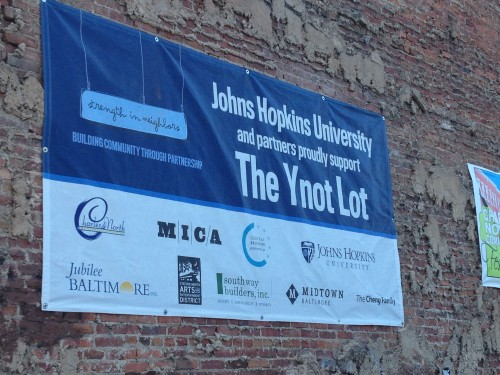
Here’s another empty lot that’s been given over to temporary usage in the neighborhood. Many people might pass the lot and see arts and crafts or yoga or music going on and think ‘hey, that’s nice.’ and it is. But as the sign shows there’s a whole lot of foundation money flying around behind the scenes. But where there is foundation money there’s big fat capital C Capital not far behind it.

039 (2)

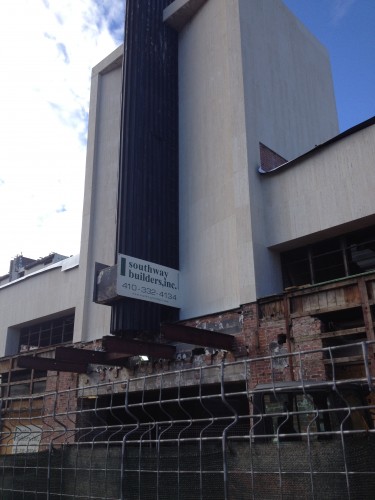
And here’s a sign of capital flowing in. Where foundation money painted murals on this building very recently, Capital is knocking holes in that mural and is coming to stay. A builder’s sign on a project this size is a very clear indication that a neighborhood is changing.

037 (2)

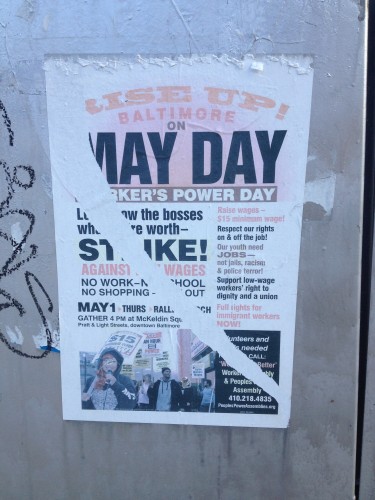
We’re going to be seeing fewer of these in the future. So long May Day rally signs. You were fun for a while.

031

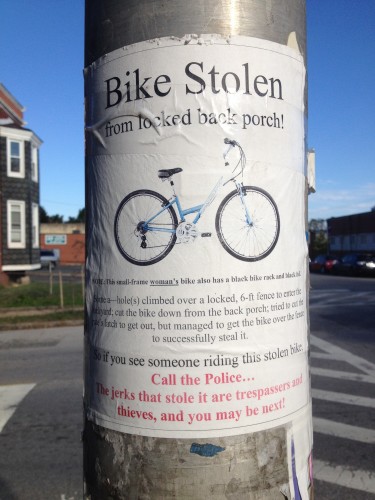
Speaking of righteous anger, this is maybe our favorite sign in this whole series. You’d only find this in a middling neighborhood where folks are still fighting the good fight against crime, but enough crime exists that they’re permanently fed up. This woman lost her bike and can’t immediately afford another one. We’d be pissed too.

045 (2)

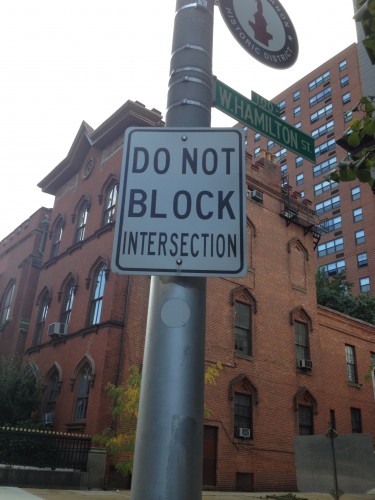
This sign says Do Not Block Intersection but what it also says is “You are now entering downtown.” If you see one of these congratulations, you’re downtown. Act accordingly.

045

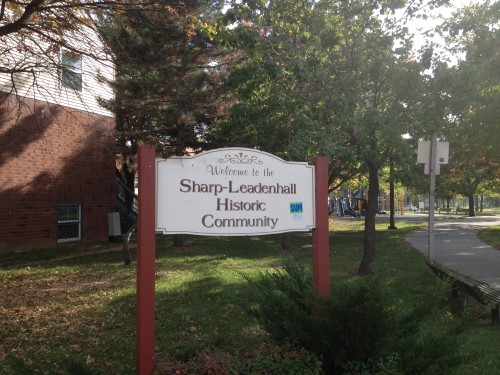
Also on the theme of signs that indicate borders, here’s a good example of one. The sign itself is pretty generic and uninteresting, and even the word historic is so overused as to be meaningless. But arguing about where one neighborhood ends and another begins is a favorite pastime of Baltimoreans going back generations. These signs don’t get placed by accident and if you see one you are definitely crossing from one distinct neighborhood to another. Keep your eyes open and start noticing things and you’ll see what we mean.

The Text and Subtext of Urban Signage, Part II

As we explained in the first post in this series, The urban landscape can be puzzling to the uninitiated. But if you were to take down all of the signs we’re featuring this week and pile them up in a warehouse somewhere we could tell you if they came from good neighborhoods, bad neighborhoods or somewhere in between just by what the signs are.

Today we’re going to look at some signs from bad neighborhoods. These are signs that you would never, ever see in nicer desirable high priced neighborhoods. We’re not interested in debating the differences between ‘good’ and ‘bad’ neighborhoods but there are some areas that have characteristics which are universally and objectively bad, and that’s where you’ll find these signs.

077

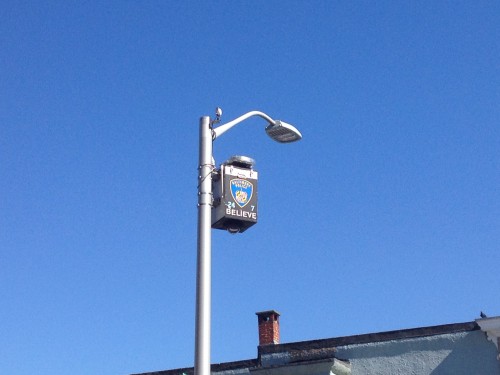
We’ll start with the old Blue Light Special. Cameras are ubiquitous to all neighborhoods and there are many types of signs that announce their presence. With these though there is no doubt you’re in a bad neighborhood. They are a surefire indication of gang activity and they’re practically a declaration of war by the police. Every design cue on this sign is meant to subtly convey a show of strength, but there’s nothing subtle about the flashing blue light (not pictured here in a morning photo) which is meant to both annoy criminals and remind them of the visceral feeling of seeing a squad car on the block.

010

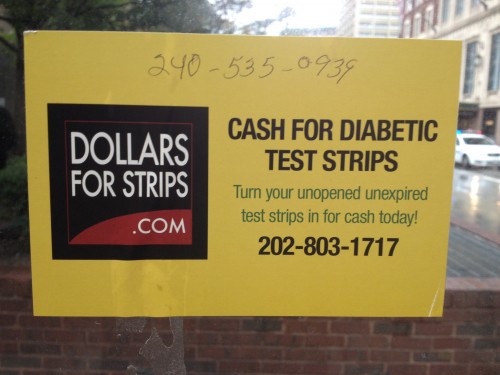
This sign pasted on a bus shelter requires a lot of knowledge of current events and sociology to understand its implications. Most people who have diabetes get their test strips paid for by their insurer and take them home and use them and that’s the end of it. But diabetes is not an equal opportunity disease. It affects the poor at a much higher rate than the rich, and minorities at higher rates than whites. These signs are entirely predatory in nature and are aimed squarely at inner cities’ poorest and most vulnerable residents. The only people selling diabetic strips are those who are getting them from Medicare or Medicaid, and for whom $5-20 represents a significant amount because they probably have no income at all besides some form of public assistance. For more on the black market for diabetic strips both here in Baltimore and nationwide here is a Google search.

014

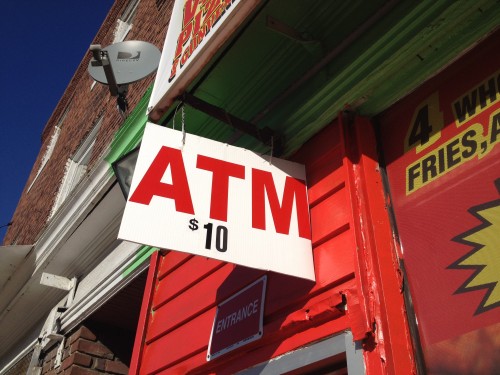
ATM Signs are pretty universal but what sets this one and ones like it apart is the “$10.” sticker affixed to it. This of course means that the machine can dispense $10 bills, but more than that it means that the customers who frequent it have such little money deposited that they will regularly wish to withdraw as little as $10 at a time. This is predatory in nature as well. Once upon a time ATM’s only dispensed twenties. In 2014 it’s not unusual to get $10 bills from any machine anywhere, but a sign like this signifies that this is a machine that is stocked with more small bills than large, because if you can trick someone into withdrawing small amounts more often you can charge them fees more often, and those fees are flat no matter how much is withdrawn.

hoodie

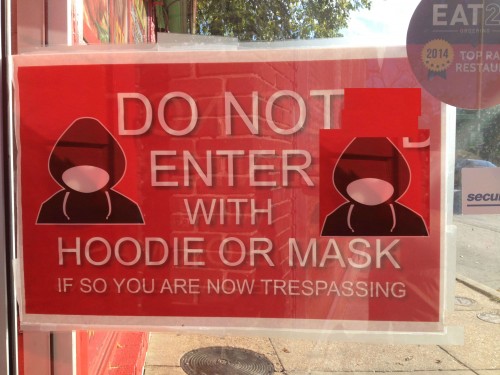
We’ve altered this sign to hide our reflection in the glass. It’s pretty self explanatory. The store owner fully expects to get held up at gunpoint by a motherfucker in a hoodie or a mask. At that point we doubt they care much about a trespassing charge but whatever, let’s move on.

037

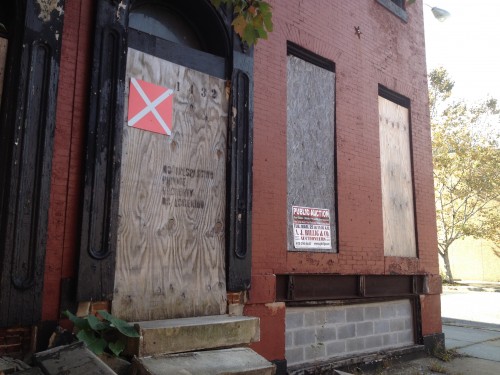
This building has two signs on it, so we get a twofer with this picture. The white X on a red field is becoming a universal symbol of Baltimore blight. That sign is meant to indicate to firefighters that a building is structurally unsound and they should not attempt to enter it if it catches fire as several did last weekend. But buildings don’t deteriorate very quickly and seeing more than one or two of these concentrated nearby indicates chronic generational disinvestment and poverty in a neighborhood. Not only are these houses empty, they’ve been empty long enough to have fallen apart.

And as you can see, this one is available for auction. Any time a residential property is up for auction it’s a red flag about the neighborhood. Auctions are the bottom of the barrel in the real estate world. It goes; private sale, market sale, short sale, foreclosure, auction. Auctions are cash sales, which means that only sleazy investors can deal in them. (We’ll also look at the sorts of real estate signs that get hung in good neighborhoods.) If you’re noticing a pattern of economic predation on our poorest neighborhoods, it’s not just your imagination.

054 (2)

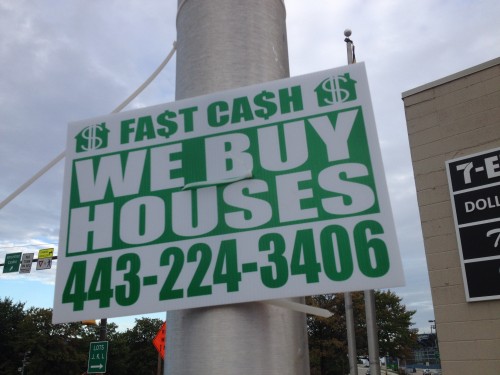
Speaking of economic predation, here’s the good ole We Buy Houses sign. Nothing good can come of selling a house fast for cash, either for the homeowner, the house or the neighborhood. The people putting these signs up know exactly what sort of houses they want to buy, which is to say those that are just barely habitable or just barely inhabitable, and they put them up near neighborhoods full of those houses.

053 (2)

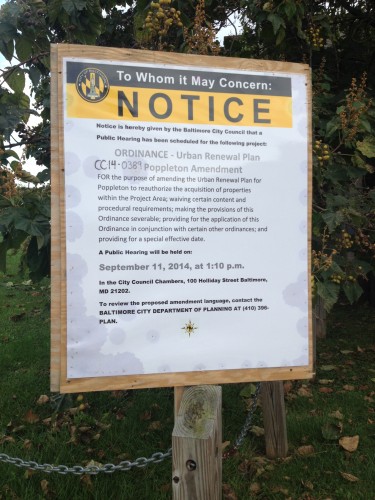
The city posts signs for hearing notices on all types of buildings for a variety of reasons. What sets this one apart and marks its neighborhood as particularly troubled is the topic of the hearing in question. This sign basically says ‘This neighborhood is so fucked we’re going to pull eminent domain and seize a whole bunch of properties all at once here.’

050 (2)

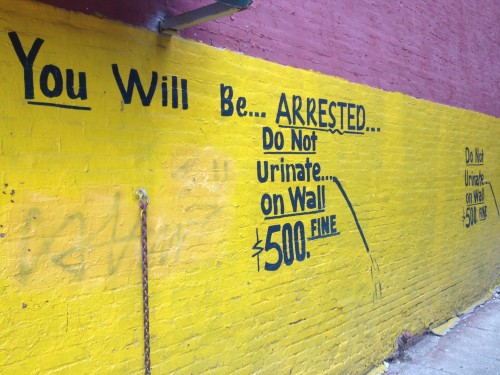
Public urination is a problem that’s not limited to poor and troubled neighborhoods. Some of the city’s most privileged residents (and visitors) are often the pissing perpetrators, and some of the most pissed-on neighborhoods are affluent ones. But the creator of this sign was pissed off, to say the least. Rather than set up a camera and a website to try to shame pissers as one Cantonite has done, this sign’s maker was fed up enough to paint his whole wall yellow. It’s an approach that is much less discreet than you would ever see in a more genteel neighborhood, and the threatening nature of it indicates that so many people have been pissing here for so long that reducing their numbers is much more important than having your property appear halfway respectable.

052 (2)

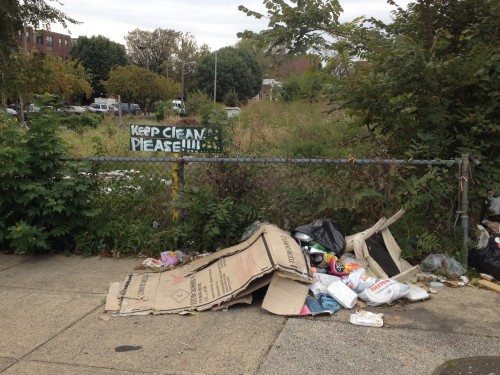
Finally we have another signmaker driven to the point of desperation with urban decay. Four exclamation points and all caps is a clue that litter and dumping has been a chronic problem in this neighborhood, which in itself signifies problems. As you can see they should have added a few more exclamations because the place is still pretty dirty.